Sunday, October 2, 2011

Welcome!


Welcome to the 2011-12 season at The Philadelphia Orchestra!  

My name is Amalya Lehmann and I am the editor of the eZseatU blog. I am a junior at the University of Pennsylvania, studying musicology, cognitive science, and violin. You will see me attending Philadelphia Orchestra concerts almost weekly.

As Philadelphia-area students, we are extremely lucky to have the opportunity to attend concerts by one of the leading orchestras in the world, for only $25 a year. Whether you are just getting into classical music, or you have listened to classical music and attended concerts for years, there will be a concert for you!

This season, we will celebrate Maestro Charles Dutoit’s 30-year legacy and his final season as chief conductor. Throughout the season, Maestro Dutoit will share the stage with superstars Lang Lang, James Ehnes, Nikolaï Lugansky, Julian Rachlin, and Gautier Capuçon, in a wide variety of programs. 

 
As we celebrate Maestro Dutoit, we will continue to learn about our next music director, Yannick Nézet-Séquin, when he will conduct three special programs this year. In November, he will conduct Brahms’s A German Requiem. In December, he will conduct a program celebrating the Philadelphia Legacy, featuring works that were premiered by the Orchestra—Curtis faculty member Jennifer Higdon’s Concerto for Orchestra and Rachmaninoff’s Rhapsody on a Theme by Paganini, which will be performed by Curtis graduate Yuja Wang. Later in January, Yannick will lead Bach’s Brandenburg Concerto No. 5 from the harpsichord and will conduct Mahler’s Symphony No. 6.

Although we are celebrating Maestros Dutoit and Nézet-Séguin, you can also look forward to concerts led by such esteemed conductors as Simon Rattle, Christoph Eschenbach, Rafael Frühbeck de Burgos, Vladimir Jurowski, Esa-Pekka Salonen, Herbert Blomstedt, Gianandrea Noseda, James Conlon, Jaap van Zweden, David Zinman, Marin Alsop, and Gilbert Varga!
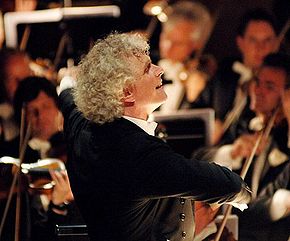
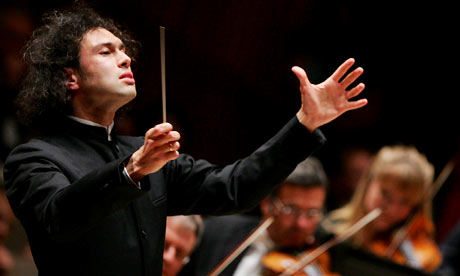
 
In addition, conductors Robin Ticciati, Nicola Luisotti, and James Gaffigan will make their Philadelphia Orchestra debuts this season.


If you’re a pianist, or just love to hear piano music, mark your calendars for the concerts featuring Maurizio Pollini, Lang Lang, Emanuel Ax, Yefim Bronfman, Leif Ove Andsnes, Stewart Goodyear, and Nikolaï Lugansky.

Another highlight is that, throughout the season, the Orchestra will perform several works by Beethoven. However, January will mark the most concentrated month of Beethoven performances by the Orchestra!

Throughout the year, I will post tidbits about the concerts that I look forward to the most.

In the meantime, which concerts are you waiting for? Comment below!

—Amalya Lehmann


Friday, February 4, 2011

February=Beethoven Month!

You might be in the midst of midterms and papers now, but The Philadelphia Orchestra is offering some really exciting concerts this month!

Except for the last concerts, which will be led by Chief Conductor Charles Dutoit, the performances this month will be led by some of the most exciting conductors around—recently appointed Metropolitan Opera Principal Guest Conductor Fabio Luisi, San Francisco Symphony Music Director Michael Tilson Thomas, and London Philharmonic Principal Conductor Vladimir Jurowski.

These three programs also all feature works by Beethoven, so I highly suggest attending all of these concerts, whether you have been listening to classical music your entire life, or are just now getting into the symphonic repertoire.


·      ·        Grimaud Plays Beethoven: February 3 and 5, 2011

First up, Fabio Luisi opens his Philadelphia Orchestra debut with Carl Maria von Weber’s Overture to his opera Der Freischutz, one of his most popular works.

French pianist Hélène Grimaud, who is otherwise known for her wolf-conservation efforts, performs Beethoven’s serene Piano Concerto No. 4. Focus especially on the second movement, characterized as depicting Orpheus’s calming the Furies at the entrance to the underworld so he can enter to retrieve his wife, Eurydice.

The concert closes with Franz Schmidt’s Symphony No. 4, a work that shows how he was a transitional composer from the late Romantic to early-20th-century style.


·         Tilson Thomas Returns: February 10-12, 2011
1
Up next is one of the concerts I am most looking forward to this season.
The engaging Michael Tilson Thomas (MTT) not only directs the San Francisco Symphony and New World Symphony in Miami, but has also conducted the Youtube Symphony Orchestra!

The program opens with Schubert’s “Unfinished” Symphony, called such because it contains only two movements. A highlight is the lovely, sweet, lyrical melody of the first movement, offering contrast to the dark and troubling second movement.

Following the Schubert, MTT leads the Philadelphia Orchestra premiere of a Suite from Leonard Bernstein’s opera, A Quiet Place.

The program closes with another Beethoven piece, his Seventh Symphony. Attend this concert if you want to find out why this Symphony has been called the “Apotheosis of Dance.” A highlight is the popular, haunting second movement, which begins with an ostinato in the lower strings, and gradually develops as more instruments join in.


·       ·       Jurowski Conducts Prokofiev: February 18-20, 2011

The following week, the vibrant and young conductor Vladimir Jurowski leads a more versatile program.

The concert begins with the Prelude to Wagner’s last opera, Parsifal, whose plot is loosely based on the medieval tales of the quest for the Holy Grail. In his operas, Wagner used Leitmotifs, themes associated with characters and concepts that recur throughout the work. In this Prelude, three leitmotifs appear, representing the Eucharist, the Holy Grail, and Faith.

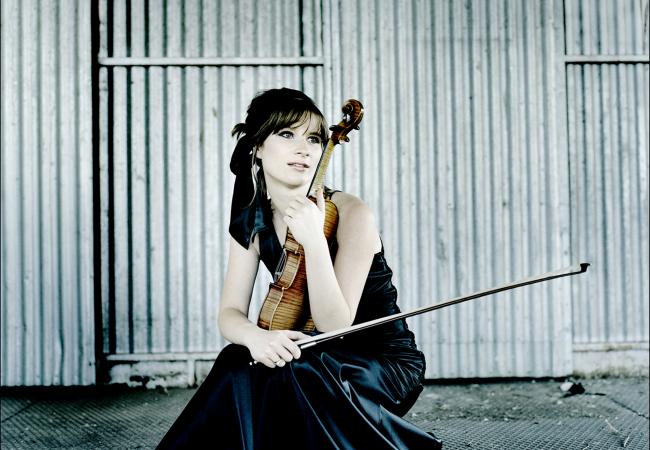
Lisa Batiashvili, the young, Georgian violinist, will perform Beethoven’s Violin Concerto next.  One of the most challenging pieces for the violin, this work is considered the first of the great Romantic violin concertos, eventually followed by the Mendelssohn, Bruch, Tchaikovsky, and Brahms violin concertos, among others.


The program ends with Prokofiev’s Sixth Symphony, a work written as an elegy to the horrors of World War II. The work was later condemned by the Stalinist regime.


·         ·     Tchaikovsky and MacMillan

Lastly, we have a program this month conducted by our own Charles Dutoit, and without a Beethoven piece (although I’m definitely not complaining about all of the Beethoven!).

Up first, a work by Dutoit’s favorite composer. Berlioz’s Overture to his Shakespeare-influenced comic opera Beatrice and Benedict. This brilliantly orchestrated piece draws upon a variety of melodies from the opera.
Next, the U.S. premiere of James MacMillan’s Violin Concerto, with the violinist Vadim Repim. This work was co-commissioned by The Philadelphia Orchestra. After its world premiere, the Independent wrote that it was “in every sense of the phrase a complete knockout. …”

The program ends with a piece beloved by everyone, Tchaikovsky’s Fifth Symphony. Listen to the way the composer connects the four movements of this work with the “Fate” motto, first used in the introduction of the first movement, then intruding in the operatic second movement, closing the ballet-like third movement, and finally used in a heroic and victorious way in the last movement.


--Amalya Lehmann